
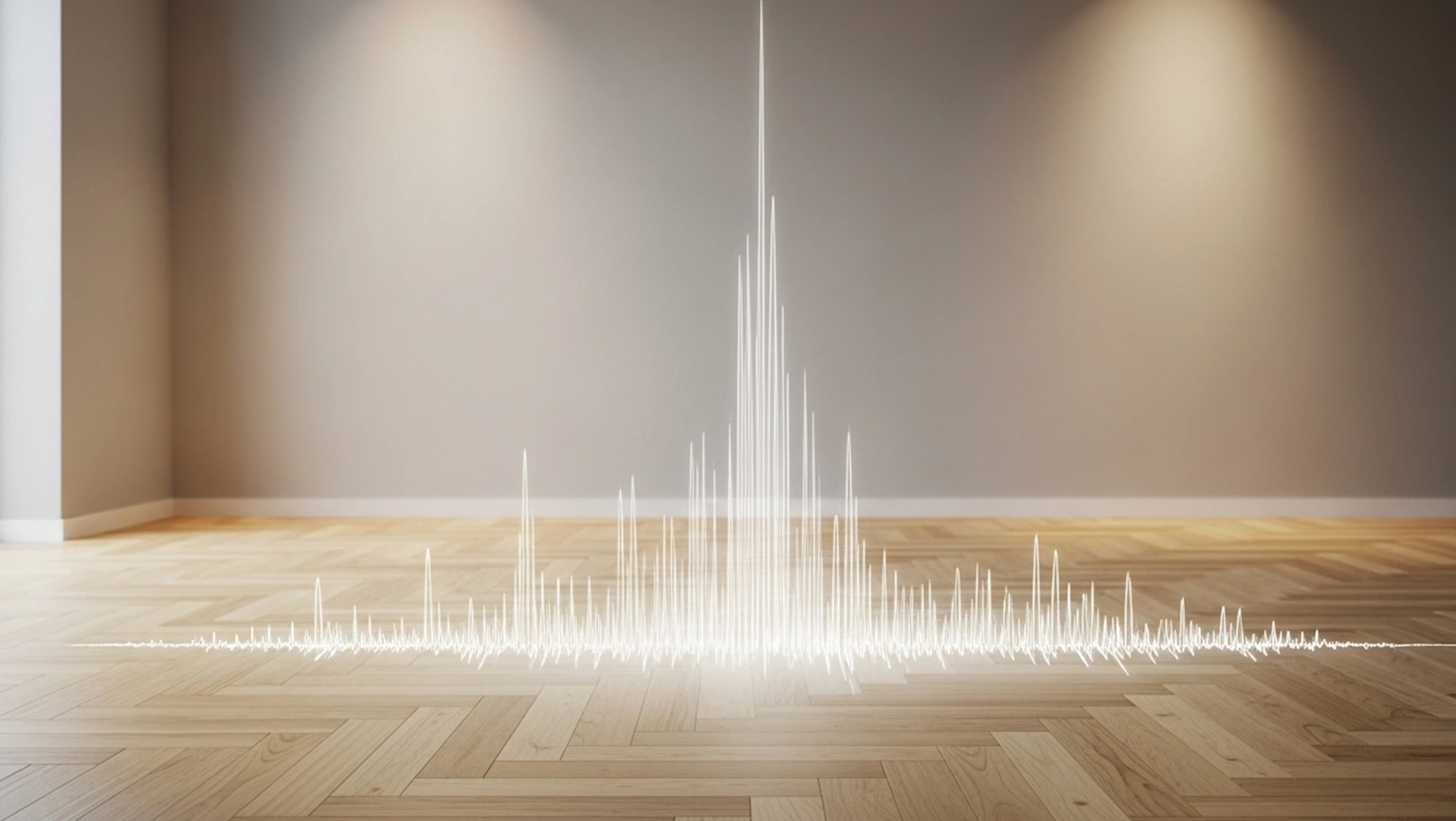
Noise has become one of the most significant challenges in modern homes, especially with the prevalence of open spaces and increased daily movement within the house. In this context, flooring plays an invisible yet essential role in improving sound quality and creating a calmer environment.
- How Flooring Affects Sound
Certain types of flooring, such as SPC and HDF, when installed with an appropriate system, help reduce the transmission of sounds generated by walking or daily movement. They also contribute to minimizing echoes within large rooms, positively impacting the overall comfort and sense of tranquility in the space.
- Flooring as a Sound-Balancing Element
While flooring does not completely block sound, it plays a crucial role in controlling its spread and reflection within a space. Choosing the right type of flooring can absorb a portion of noise and reduce disturbances caused by repeated sounds, without the need for complex solutions or visible additions.
- The Importance of Proper Installation
The effectiveness of flooring in sound insulation depends not only on its material but also on the method of installation and accompanying insulation. Proper installation significantly enhances its acoustic performance.
Conclusion
Calmness within a home does not start solely from walls or ceilings; it begins with the floor, which serves as the foundation for acoustic balance in interior spaces.

 EN
EN  AR
AR