
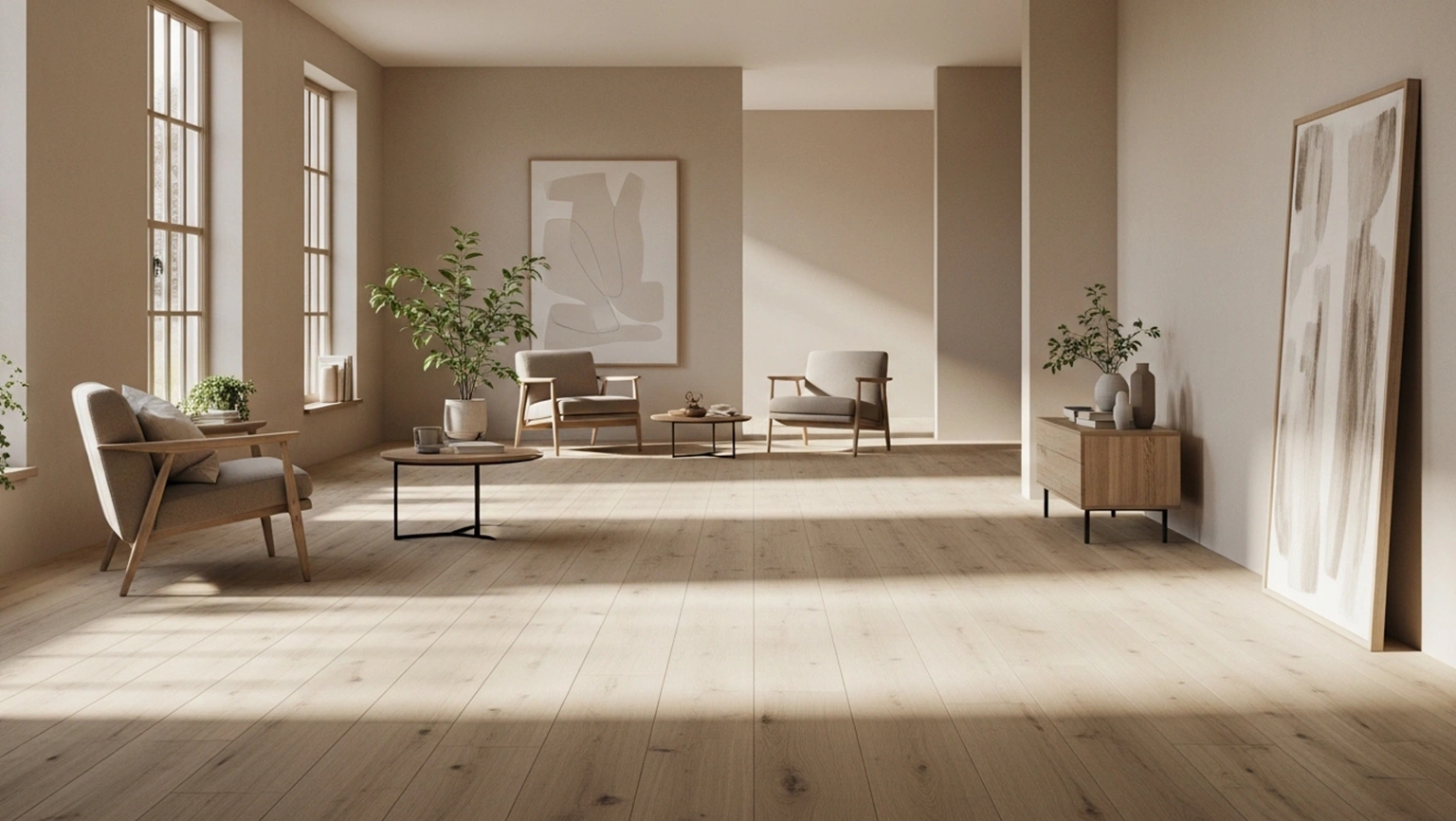
Flooring plays a fundamental role in shaping the first impression of any interior space. It is the first element we interact with both physically and visually, even if we are not consciously aware of it. While some may assume that furniture or wall colors are the primary factors influencing the overall atmosphere of a space, flooring actually represents the psychological foundation upon which this feeling is built.
- Material and Its Psychological Impact
The material of the flooring has a direct effect on how people feel within a space. Materials with a natural character, such as engineering wood, create a sense of warmth, comfort, and stability, which enhances feelings of calmness and belonging.
In contrast, more rigid and uniform materials reflect a sense of order and visual clarity, making them suitable for spaces that require focus or mental calm. This contrast in materials influences the user’s sense of comfort or tension without conscious awareness.
- Color and Texture
Flooring colors play an important role in shaping mood. Light and neutral tones help create a calm and psychologically balanced environment, while darker colors add a sense of luxury or formality and may make the space feel more serious.
Texture also affects the sense of safety while moving within a space. Comfortable flooring provides a feeling of stability and reassurance, which positively influences daily interaction with the environment.
Conclusion
Flooring is not merely a decorative finishing element; it is a silent psychological factor that deeply affects our daily relationship with a space and our overall sense of comfort within it.

 EN
EN  AR
AR