
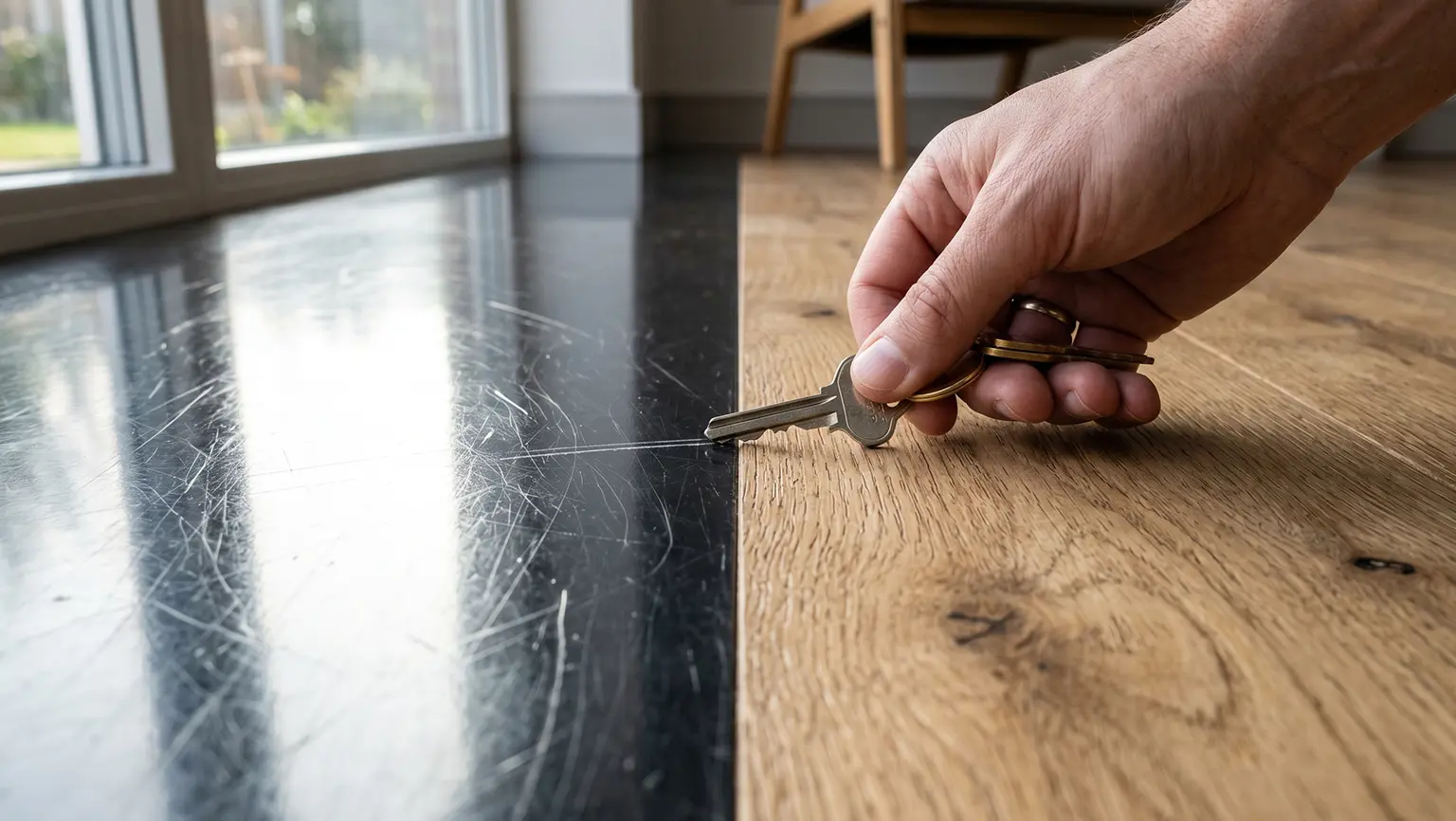
Two floors may experience the same daily use. yet one quickly shows scratches while the other maintains its appearance for a much longer time.
And the reason is not always the quality of the material, as some people believe.
Several factors affect how visible scratches appear
- Floor Color
Dark and solid-colored floors tend to reveal scratches. and signs of movement more than medium tones or floors that contain natural patterns and wood grain variations - Level of Shine
Glossy floors reflect light strongly, which makes fine marks and scratches more noticeable compared to matte finishes. - Surface Texture
Some floors include textures and patterns that imitate natural wood, helping to hide signs of daily use more effectively. - Type of Surface Layer
Scratch resistance varies depending on the quality of the top protective layer used in the flooring, whether it is SPC, Engineered Wood, or other types.
That is why, if the home includes children, pets, or constant movement, it may be smarter to choose flooring that does not easily reveal signs of daily use, rather than focusing only on color or appearance.

 EN
EN  AR
AR