
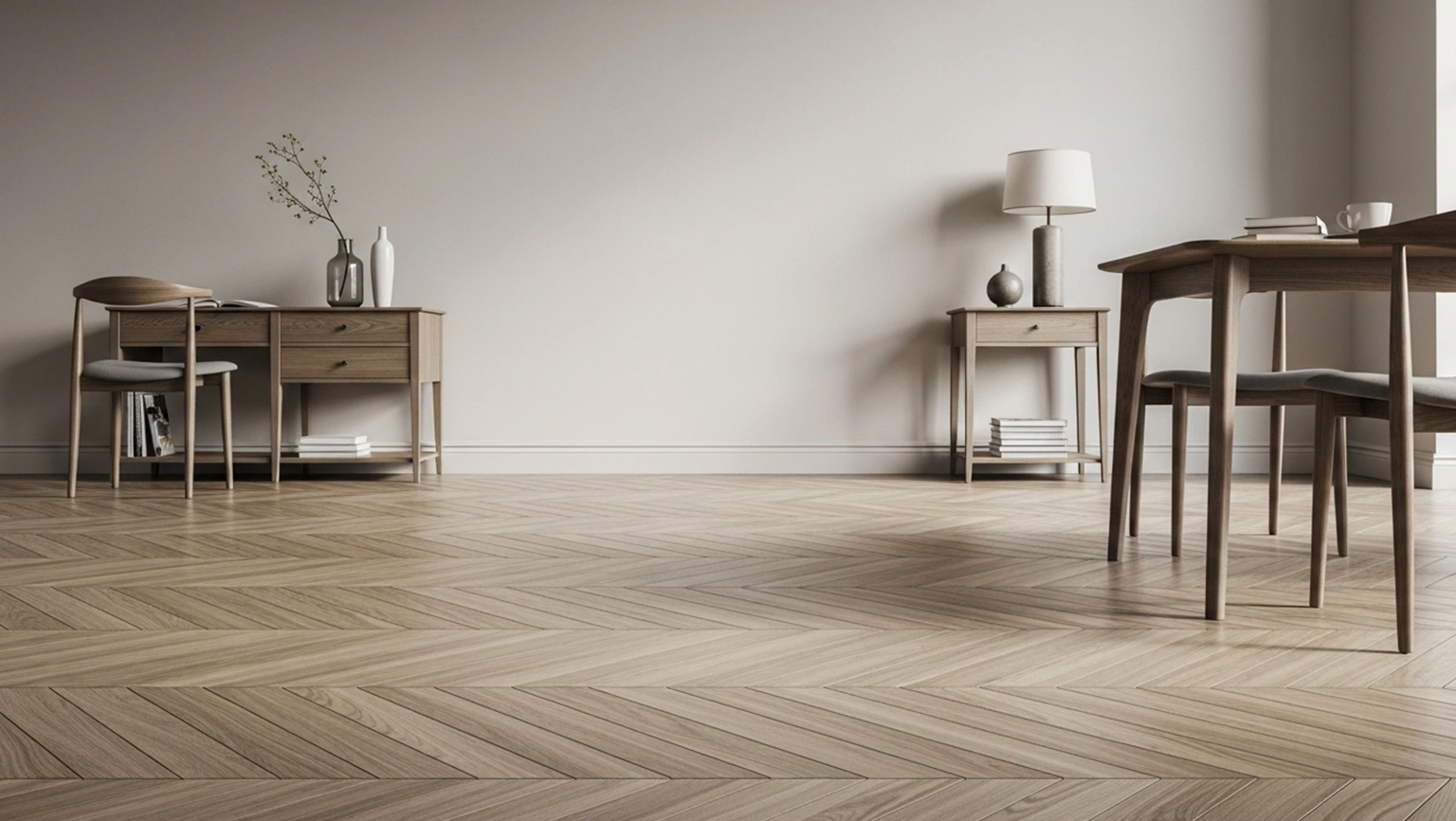
When considering the function of any interior space, attention often focuses on furniture and its arrangement, while the fundamental role of flooring in determining how the space is used is frequently overlooked. Flooring is the fixed element that precedes the presence of furniture and directly affects movement and interaction within the space.
- Daily Movement and Flooring
Flooring establishes an invisible rhythm for movement within a space. Durable and stable floors, such as SPC, encourage intensive daily use and continuous movement without concern, making them suitable for active areas. In contrast, warmer floors, like Engineering Wood, promote a calmer use of the space, whether for sitting or relaxation.
- Impact of Flooring on Furniture Arrangement
In many cases, the pattern and direction of floorboards dictate the placement of furniture, often unconsciously. Longitudinal or transverse floorboard directions can define movement paths and create focal points within a room.
- Dividing Spaces Without Barriers
Floors can act as a smart tool to delineate open spaces by varying materials or orientations, without the need for walls or partitions. This provides greater flexibility in how to utilize the area.
Conclusion
Flooring does not merely complement the function of a space; it establishes the foundation upon which furniture to place, rather than the other way around.
 EN
EN  AR
AR